Founding Batch open — Preparation Booster at ₹8,400 instead of ₹14,000 for the first 50 students.View course
Sagar Path AcademyGuiding Dreams · Navigating Futures

Career guide

Everything you need to decide, in one place.

Written by people who have sailed, for students and parents who are tired of contradictory advice. No sales pitch — just the information you need before you commit money, marks or years.

The career, in plain language

The Merchant Navy is the commercial fleet that moves the world.

Roughly nine out of every ten things around you — the phone in your hand, the fuel in your bike, the oil in your kitchen, the fertiliser in a farmer's field — travelled by sea for part of its journey. The ships that carry them are the Merchant Navy, and the officers who run those ships are among the best-paid professionals India produces at the age of 21.

It is not the Indian Navy. There is no combat, no defence role and no army-style selection. It is a commercial career: you are a licensed professional operating a multi-million-dollar vessel for a shipping company, under international maritime law.

A ship has two officer departments. The Deck department navigates the ship, handles cargo and takes command — Deck Cadet to Third Officer to Second Officer to Chief Officer to Captain. The Engine department runs and maintains the machinery — Trainee Eng → 4th Eng → 3rd Eng → 2nd Eng → Chief Engineer. Both are officer careers. Both pay extremely well. You choose one before you start.

~90%

of world trade moves by sea

21

typical age of a newly qualified officer

3–6 Months

typical contract duration for officers

Tax benefits*

for seafarers who qualify as NRI

*Seafarer income tax treatment depends on your NRI status and the days you spend outside India in a financial year — it is not automatic and it is not the same for everyone. Confirm your own position with a qualified chartered accountant. We explain the rules during counselling; we do not give tax advice.

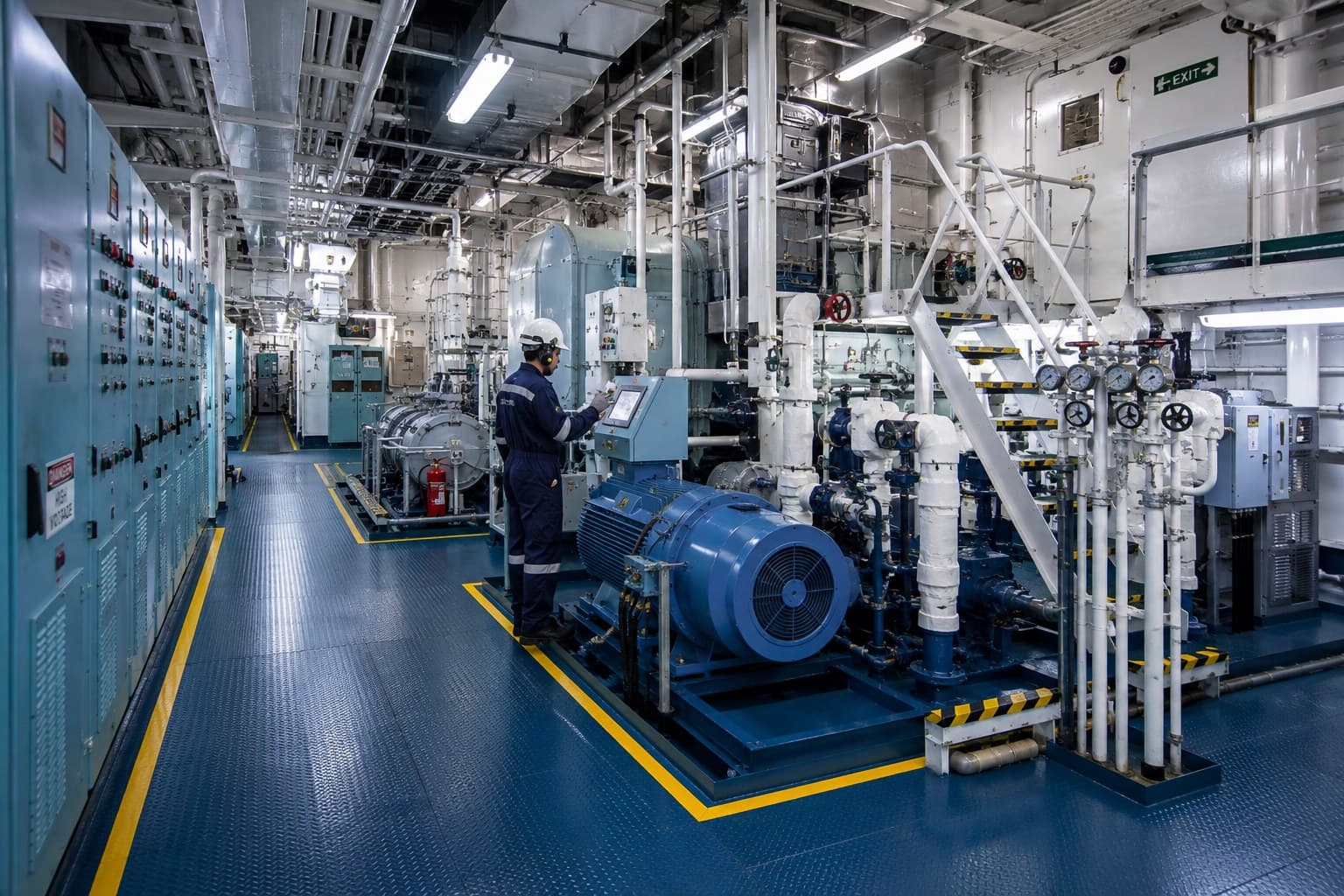
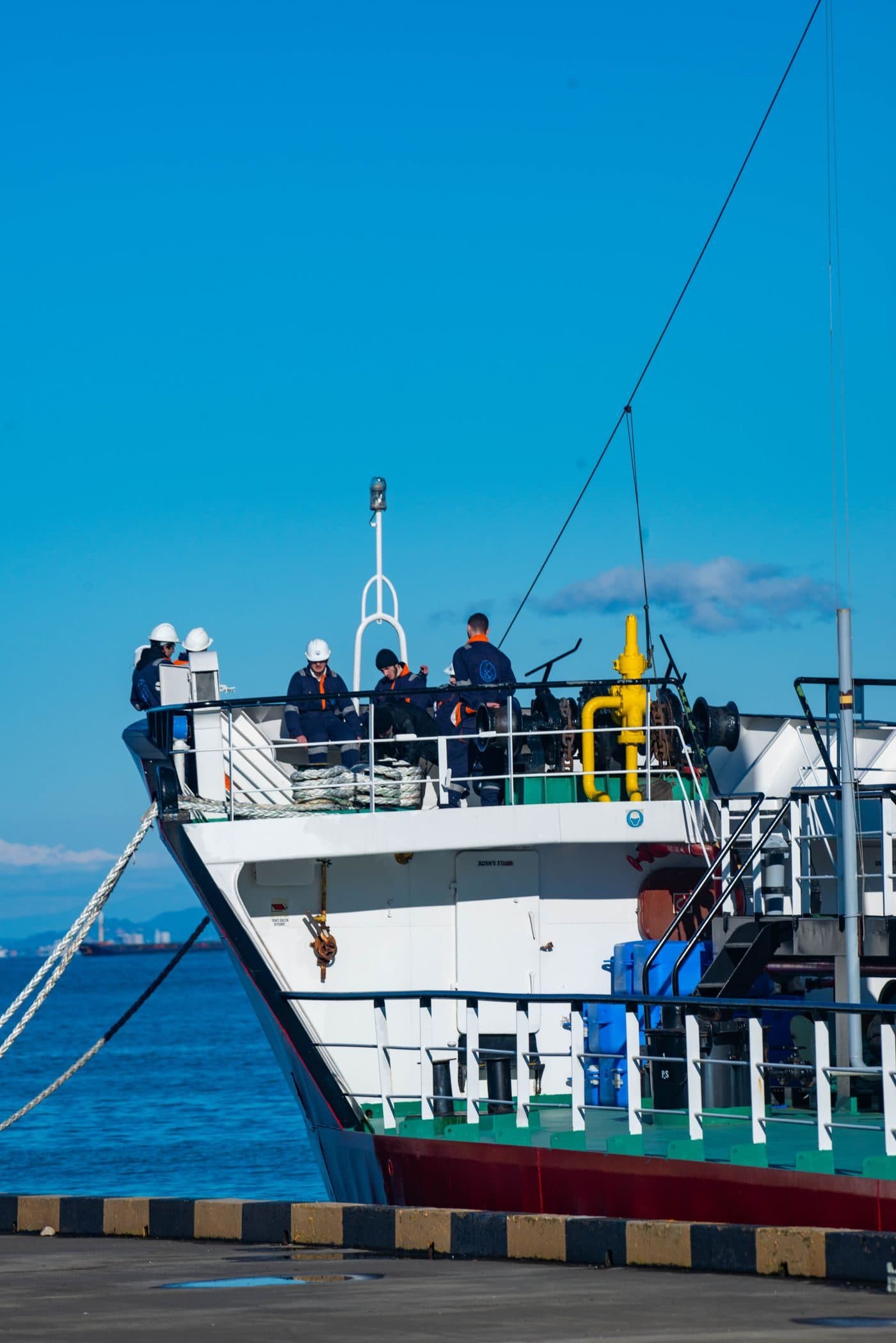
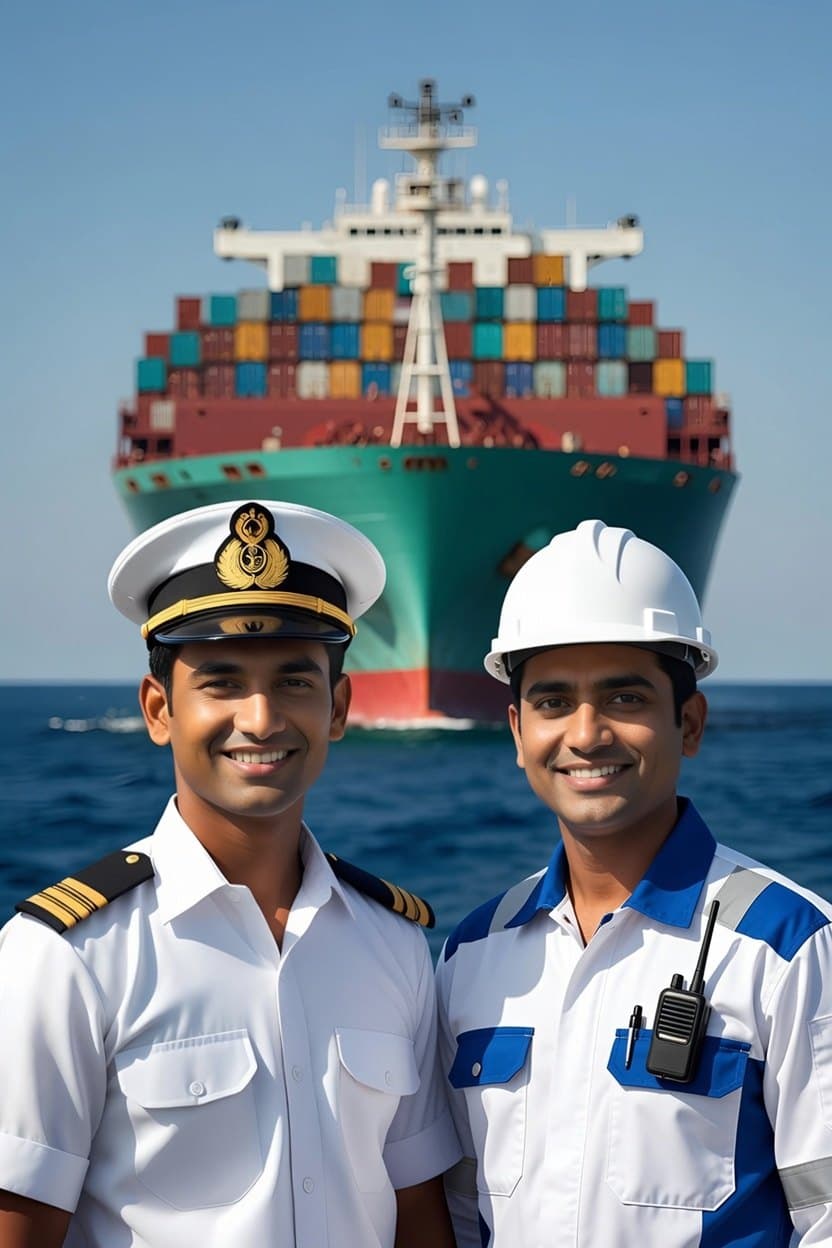
A Deck officer and an Engine officer in front of a container ship

Two departments. One ship. Two very different careers.

Deck

Cadet → 3rd Officer → 2nd Officer → Chief Officer → Captain

Engine

Trainee Eng → 4th Eng → 3rd Eng → 2nd Eng → Chief Engineer

Career pathways

Six ways in. Compare them honestly.

Every route below leads to a career at sea. They differ enormously in duration, cost, eyesight requirement and what you end up qualified as.
DNS

Diploma in Nautical Science

After 12th (PCM) · Deck

Duration
1 year college + 18 months sea time
Entry via
IMU CET + company sponsorship
You become
Deck Cadet → Third Officer → Second Officer → Chief Officer → Captain

Eligibility

  • Class 12 with Physics, Chemistry and Mathematics
  • Typically 60% aggregate in PCM
  • Typically 50% in English (Class 10 or 12)
  • Unaided 6/6 vision, no colour blindness
  • Age generally 17–25 years

Advantages

  • Fastest route to sea and to a salary
  • Most heavily sponsored course in the industry
  • You are earning while your school friends are still in second year

Trade-offs

  • Strictest eyesight standard of all the routes
  • Almost always requires a company sponsorship to be worth taking
  • Diploma, not a degree — matters if you later want a shore career

Best if: You have 6/6 unaided vision, strong PCM marks and you want to start earning as early as possible.

B.Sc.

B.Sc. Nautical Science

After 12th (PCM) · Deck

Duration
3 years
Entry via
IMU CET
You become
Deck Cadet → Third Officer → Second Officer → Chief Officer → Captain

Eligibility

  • Class 12 with Physics, Chemistry and Mathematics
  • Typically 60% aggregate in PCM
  • Typically 50% in English (Class 10 or 12)
  • Unaided 6/6 vision, no colour blindness
  • Age generally 17–25 years

Advantages

  • A full degree, which keeps shore-side options open later
  • Same officer career ladder as DNS
  • More time to mature before your first contract

Trade-offs

  • Two years longer than DNS before you earn
  • Same strict 6/6 eyesight requirement
  • Sponsorship is possible but less common than for DNS

Best if: You want the Deck career but would rather hold a degree than a diploma, and you are comfortable starting to earn later.

B.Tech

B.Tech Marine Engineering

After 12th (PCM) · Engine

Duration
4 years
Entry via
IMU CET
You become
Trainee Eng → 4th Eng → 3rd Eng → 2nd Eng → Chief Engineer

Eligibility

  • Class 12 with Physics, Chemistry and Mathematics
  • Typically 60% aggregate in PCM
  • Typically 50% in English (Class 10 or 12)
  • Relaxed vision standard — spectacles generally permitted
  • Normal colour vision usually required at entry

Advantages

  • Vision standard is the most forgiving of the officer routes
  • A recognised engineering degree with strong shore-side value
  • Engine officers are in persistent global demand

Trade-offs

  • Longest route — four years before you sail
  • Physically demanding work in the engine room
  • Higher course fees than DNS

Best if: Spectacle wearers who enjoy machinery and systems and want an engineering degree that also takes them to sea.

GME

Graduate Marine Engineering

After engineering degree · Engine

Duration
1 year (after B.E./B.Tech Mechanical)
Entry via
Company / institute entrance
You become
Trainee Eng → 4th Eng → 3rd Eng → 2nd Eng → Chief Engineer

Eligibility

  • B.E. or B.Tech in Mechanical (or allied) engineering
  • Typically 50–60% aggregate depending on the company
  • Relaxed vision standard, spectacles generally permitted
  • Age limit varies by company

Advantages

  • Converts an existing mechanical degree into a sea career in one year
  • No need to have taken IMU CET after 12th
  • Strong sponsorship availability for good candidates

Trade-offs

  • Only open to engineering graduates
  • You start sailing later in life than a 12th-entry candidate

Best if: You already hold (or are finishing) a mechanical engineering degree and want to move to sea.

ETO

Electro-Technical Officer

After electrical/electronics degree · Engine

Duration
4 months (after electrical/electronics degree)
Entry via
Company / institute entrance
You become
ETO → Senior ETO (specialist electro-technical career at sea)

Eligibility

  • B.E./B.Tech in Electrical, Electronics or allied branch
  • Marks criteria set by the sponsoring company
  • DG Shipping approved medical fitness

Advantages

  • Very short conversion course
  • Growing demand as ships become more automated
  • Less crowded than the Deck route

Trade-offs

  • Career ladder is narrower than Deck or Engine
  • Requires a specific degree background

Best if: You have an electrical or electronics degree and want the fastest professional entry to sea.

GP Rating

General Purpose Rating

After 10th or 12th · Rating

Duration
6 months pre-sea training
Entry via
Institute entrance / merit
You become
Rating (crew) — with a long route to officer rank via further certification

Eligibility

  • Class 10 or 12 pass
  • Typically 40% in English and overall
  • DG Shipping approved medical fitness
  • Age criteria set by the training institute

Advantages

  • Only route available immediately after Class 10
  • Short, low-cost entry to a sea career
  • Real sea experience from an early age

Trade-offs

  • Crew rank, not officer rank — significantly lower salary ceiling
  • Promotion to officer requires years of additional study and certification
  • Many unapproved institutes exploit this route — verify DG Shipping approval

Best if: You cannot wait until after 12th, or PCM is not an option for you. We will be honest with you: if you can finish 12th with PCM, do that instead.

Common to every route

Age
Generally 17 to 25 years at entry. Women get an additional 2 years, so up to 27. Reserved categories get further relaxation as notified.
Nationality
Indian citizen.

Age limits and relaxations are set by the Indian Maritime University and can change from one cycle to the next. Always confirm against the official notification for the year you are applying in.

Medical & Eyesight Examination

Check this before you pay anyone.

Every year students spend a year and a fee preparing for a route their eyesight was never going to allow. It takes twenty minutes at an eye clinic to avoid that.
01

Why Medical Fitness is Compulsory

  • DG Shipping makes medical fitness compulsory for every seafarer.
  • Without a valid medical certificate from a DG-approved doctor, you cannot join any ship or get CDC / Certificate of Competency.
  • Ships are far from hospitals — any serious health issue can put your life and the entire crew in danger.
02

General Medical Requirements

You must be:

  • Physically and mentally fit for sea life
  • Free from any disease that can worsen far from medical help
  • Free from communicable diseases
  • Free from history of fits / seizures / epilepsy
  • Free from insulin-dependent diabetes
  • Having good overall health and stamina for long watches and emergencies
03

Eyesight & Colour Vision Standards

Deck Department

  • Distant vision: 6/6 (better eye) and 6/9 (other eye) — unaided
  • Spectacles / contact lenses: Not allowed
  • Colour vision: Must be normal (Ishihara test mandatory)

Engine Department

  • Distant vision: 6/12 in each eye or 6/9 + 6/18
  • Spectacles: Allowed (within limits)
  • Colour vision: Normal required (mild cases may be reviewed)

Lasik / Eye Surgery

  • Allowed after minimum 6 months, provided vision is stable and meets the required standards.
04

Common Reasons for Unfitness & Myths

Conditions that may lead to unfitness

  • Poor eyesight or colour blindness (especially Deck)
  • Hearing loss beyond limits
  • Uncontrolled high blood pressure
  • Heart disease, active TB, unoperated hernia
  • Significant psychiatric illness

Myths vs Facts

  • Wearing glasses ≠ automatic rejection (Engine is open)
  • Colour blindness ≠ complete ban (Engine may still be possible)
  • Lasik is allowed (not automatic rejection)
  • Temporary unfitness can be corrected — re-medical is possible

Exact medical and academic standards are set by DG Shipping, by the Indian Maritime University and by individual shipping companies — and they are revised. Treat the figures above as a planning guide, get your eyesight and colour vision tested before you commit money to any course, and verify current rules at dgshipping.gov.in.

Full medical guide

The entrance exam

IMU CET, explained without the noise.

IMU CET is the Common Entrance Test conducted by the Indian Maritime University for admission to its undergraduate maritime courses — DNS, B.Sc. Nautical Science, B.Tech Marine Engineering and others. It is a computer-based test, it is multiple choice, and it is entirely beatable with structured preparation.

Exam pattern

  • ModeComputer-based test (CBT), online
  • Questions200 multiple-choice questions (UG courses)
  • Duration3 hours (180 minutes)
  • Marking+1 for each correct answer, with negative marking for wrong answers
  • Negative markingApplied in recent cycles — verify the current year's notification
  • LevelClass 11 and Class 12 standard

Sections & what they test

  • MathematicsHeavy

    Algebra, trigonometry, calculus, coordinate geometry, probability.

  • PhysicsHeavy

    Mechanics, electrostatics, current electricity, optics, EM waves, modern physics.

  • ChemistryModerate

    Physical, organic and inorganic chemistry at Class 11–12 level.

  • EnglishModerate

    Grammar, comprehension, vocabulary, sentence correction.

  • General AptitudeModerate

    Logical reasoning, series, data interpretation, basic quantitative aptitude.

  • General KnowledgeLight

    Current affairs, static GK, maritime awareness.

Typical annual timeline

  1. 01

    March – May

    Registration window opens on the official IMU website

  2. 02

    May

    City selection and admit card release

  3. 03

    May (typically)

    Exam day — CBT across test centres in India

  4. 04

    June

    Result and rank declaration

  5. 05

    June – August

    Counselling, seat allotment and college admission

  6. 06

    Year-round

    Company sponsorship tests and interviews — these run on their own calendars

Dates shift every cycle. Always confirm the current year’s notification on the official IMU website before relying on any timeline.

Why students fail

Six mistakes that account for most IMU CET failures.

They treat it like a board exam

IMU CET rewards speed and selection, not exhaustive writing. 200 questions in 180 minutes is under a minute per question. That skill is built only through repeated full-length mocks.

They ignore English, GK and Aptitude

These sections are a large chunk of the paper and are the easiest marks available. Students obsess over Physics and lose the exam in the sections they never opened.

They never sat a timed full paper before exam day

The first full-length paper you attempt should not be the real one. Ours run every Saturday for eight months.

They prepare for the exam and nothing else

A rank is not a job. Sponsorship interviews, medicals and documentation decide as much as the paper does — and they need their own preparation.

They take advice from social media and seniors

Free advice is worth what you pay for it. Half the "IMU CET tips" circulating online are outdated by two syllabus revisions.

They discover a medical disqualification too late

Eyesight and colour vision are checked before your money is refunded, not after. Get your standards checked before you choose a route — we do this in the first counselling session.

How you actually get selected

Sponsorship is a second exam. Most students never prepare for it.

A shipping company sponsorship means a company commits to taking you as a cadet, paying for or subsidising your training, and giving you the sea time you need to qualify. For the DNS route in particular, a sponsorship is close to essential — a DNS without a sponsoring company can leave you with a diploma and no ship.

The selection process, step by step

  1. 1

    IMU CET rank

    Many companies use a rank cut-off as their first filter. Some ask for a rank inside the top few thousand.

  2. 2

    Company written test

    A separate paper on Physics, Chemistry, Maths, English and aptitude — set by the company, not by IMU.

  3. 3

    Psychometric assessment

    Personality and situational judgement testing. There is no "studying" for this, but there is preparation.

  4. 4

    Personal interview

    A panel that usually includes a serving Master or Chief Engineer. This is where most students are lost.

  5. 5

    Medical examination

    DG Shipping approved medical, including strict eyesight and colour vision checks.

  6. 6

    Sponsorship letter

    The formal offer. Read the bond terms carefully before signing anything.

What panels actually ask

  • Tell me about yourself — in 90 seconds, without rambling
  • Why the Merchant Navy, and why not something else?
  • What does your family think about you being away for six months?
  • What do you know about our company and our fleet?
  • Basic technical questions from Class 11–12 Physics
  • Situational judgement: what would you do if a senior officer was wrong?
  • Are you willing to sail on any vessel type, on any route?
  • What will you do if you do not clear this selection?
Interview Mastery Course

Companies that sponsor Indian cadets

Anglo-EasternSynergy MarineFleet ManagementV.ShipsMaerskMSCGreat Eastern ShippingBernhard Schulte (BSM)WallemScorpioWilhelmsenEastern Pacific (EPS)Shipping Corporation of IndiaSeven IslandsTormAmer Shipping

Companies our mentors have sailed with, and companies that run cadet sponsorship schemes in India. Listing a company here does not imply any partnership with, or endorsement by, that company.

Avoiding fraud

No legitimate shipping company charges you a fee for a sponsorship offer. Verify every institute’s DG Shipping approval before paying anything. If an offer is guaranteed, urgent and requires cash, it is a fraud. Send us any offer you receive and we will help you verify it — free, whether or not you are our student.

What the career actually pays

Salary and growth, without the exaggeration.

These are indicative monthly figures for Indian seafarers, compiled from publicly reported industry ranges. Actual pay varies enormously with the shipping company, the vessel type, the trade route and your certificates. Treat this as a shape, not a promise.

Deck Department

  • 1

    Deck Cadet (trainee)

    Year 1–1.5

    ₹25,000 – ₹70,000

  • 2

    Third Officer

    After 2nd Mate CoC

    ₹1.5 – 3.5 lakh

  • 3

    Second Officer

    +2–3 years

    ₹2.0 – 4.5 lakh

  • 4

    Chief Officer

    +3–5 years

    ₹4.0 – 8.0 lakh

  • 5

    Captain / Master

    +8–12 years

    ₹8.5 – 20 lakh+

Engine Department

  • 1

    Trainee Marine Engineer

    Year 1–1.5

    ₹25,000 – ₹70,000

  • 2

    Fourth Engineer

    After MEO Class IV

    ₹1.5 – 3.0 lakh

  • 3

    Third Engineer

    +2–3 years

    ₹2.0 – 4.5 lakh

  • 4

    Second Engineer

    +3–5 years

    ₹4.0 – 8.0 lakh

  • 5

    Chief Engineer

    +8–12 years

    ₹8.5 – 20 lakh+

Salary is paid only for the months you are onboard. Example: a 6-month contract followed by 3 months of leave is normal, so annual income is not simply monthly pay × 12.
Food, accommodation, medical cover and travel to and from the ship are provided by the company while you are on contract.
Income tax depends on your NRI status and days spent outside India — confirm with a chartered accountant.
Promotion depends on sea time plus clearing Certificate of Competency (CoC) examinations. It is not automatic.

Think before you sail

6 qualities every Merchant Navy aspirant must have

This career asks things of you that a brochure will not mention. Read these honestly before you commit.

Stay Away from Family

Be prepared to spend 3–6 months at sea away from loved ones.

Mental Toughness

Handle loneliness, stress and pressure with resilience.

Discipline

Safety, responsibility and following procedures come first.

Physical Fitness

Good health and stamina are essential for shipboard life.

Adaptability & Teamwork

Live and work with multinational crews in confined settings.

Genuine Passion

Join for the profession — not just the salary.

A Merchant Navy career is not just a job — it is a lifestyle. Choose it only if you are ready for the journey.

Before you commit, know what you are committing to

What life at sea is actually like.

We would rather you decide against this career now, with clear information, than three months into your first contract. Here is the honest version.
01

Contracts and leave

A typical officer contract runs 3 to 6 months onboard, followed by paid or unpaid leave depending on your company. Cadets often sign longer contracts because sea time is what qualifies them. You will miss festivals, weddings and birthdays. That is the trade.

02

The daily routine

Watchkeeping is usually 4 hours on, 8 hours off, twice a day, plus additional duties. There are no weekends at sea. The work is disciplined, procedural and safety-driven — the habits you build in Class 12 matter more than you think.

03

Living conditions

Officers get their own cabin with an attached bathroom on most modern vessels. Food is provided and Indian crew usually means Indian food. Gyms, recreation rooms and satellite internet are common now, though internet quality varies a great deal by company and vessel.

04

Who you sail with

A ship carries roughly 20 to 25 people from several nationalities. English is the working language. You will learn to live and work closely with people very different from you — this is one of the genuinely valuable things the career teaches.

05

The hard parts

Isolation is real. So is homesickness, especially in the first contract. The sea can be rough, the hours can be long, and port calls are often too short to see the country you have arrived in. People who romanticise "travelling the world" are frequently disappointed.

06

The good parts

You will be financially independent at an age when most of your friends are asking their parents for money. You will hold real responsibility early. And the professional ceiling — Captain or Chief Engineer, with a global licence — is genuinely high.

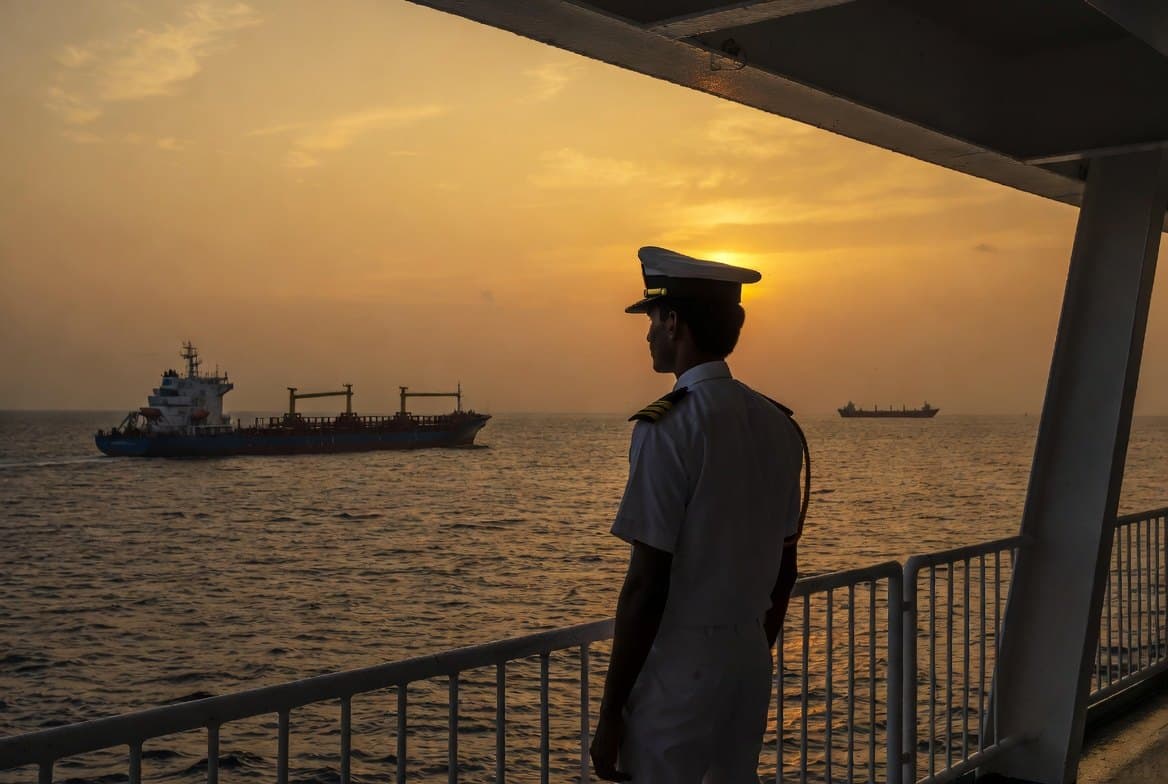
A Merchant Navy officer on deck watching a vessel at sunset

“Months at sea, watch after watch, far from home — this is the life behind the salary. Choose it knowing exactly what it asks of you.”

Career questions

The questions we get every single week.

All frequently asked questions

Still unsure? A ₹150 counselling session answers all your doubts and queries.

Book career counselling

The Indian Navy is a defence force. The Merchant Navy is a commercial industry — cargo ships, tankers, container vessels and car carriers moving goods for shipping companies. There is no combat role, no defence selection process, and you are employed by a company rather than the armed forces.

It depends on three things: your eyesight, your PCM marks and how soon you need to start earning. DNS is the fastest route (1 year plus sea time) but demands unaided 6/6 vision. B.Sc. Nautical is the same career with a degree over 3 years. B.Tech Marine Engineering takes 4 years but has a far more relaxed vision standard, so it is often the right answer for students who wear spectacles. This is exactly what a counselling session is for.

Very likely yes — through the Engine department. B.Tech Marine Engineering and GME accept corrected vision with spectacles in most cases. The Deck routes (DNS, B.Sc. Nautical) are the ones that generally require unaided 6/6 vision. Get a proper eye test done before you choose a route.

For the Deck department, yes — normal colour vision on the Ishihara test is required and there is no relaxation, because navigation depends on identifying coloured lights and signals. For engineering roles the standard is significantly more relaxed and is assessed by the approved medical examiner.

Yes. Women sail as Deck Officers, Marine Engineers and ETOs, and several companies run dedicated women cadet courses. The eligibility, exam and medical standards are the same, and women also get an additional two years of age relaxation. The main practical considerations are the same ones every seafarer faces — long contracts and time away from home.

Entry is generally between 17 and 25 years. Women get an additional two years, so up to 27. Reserved categories get further relaxation as notified. You also need to be an Indian citizen. Age limits and relaxations are set by the Indian Maritime University and can change from one cycle to the next, so always confirm against the official notification for the year you are applying in.

Indicative monthly figures: a cadet or trainee engineer earns roughly ₹25,000–₹70,000; a junior officer after their first CoC roughly ₹1.5–3.5 lakh; and a Captain or Chief Engineer ₹8.5–20 lakh or more. But you are paid only for the months you are onboard, so annual income is not monthly pay multiplied by twelve. Figures vary widely by company, vessel type and route.

The only route immediately after Class 10 is a GP Rating course, which places you in the crew ranks rather than the officer ranks — a much lower salary ceiling and a long, difficult route to officer rank later. Our honest advice: if you can complete Class 12 with PCM, do that and enter as an officer.

CallWhatsAppCounselling